


 Getty Images
Public inquiries should have set budgets and timeframes, MSPs have recommended amid concerns about spiralling costs.
Holyrood’s finance committee has warned that statutory public inquiries are “over-stretched and poorly defined” with limited financial oversight.
It found that the cost of inquiries in Scotland has risen by £30m this year, totalling almost £260m since 2007.
The Scottish government welcomed the report and said it would respond to the proposals in due course.
Five public inquires were started in Scotland between 2007 and 2014, including the Penrose contaminated blood probe and the Edinburgh Tram inquiry, at a cost of £42.6m.
Since 2014, a further six inquiries have been launched, costing £204.8m so far.
The committee’s report states that the total cost of the inquiries since 2007 – adjusted for 2024-25 prices – is £258.8m.
The committee’s report recommended that inquiries have defined budgets and timescales, and that any extensions should be justified to parliament.
It cited the example of Sweden, where public inquiries are typically required to conclude within two years and within a set budget.
It warned of pressure on public services when resources are redirected to inquiries, which can last for years.
The committee gave the example of judges being diverted away from court cases to oversee inquiries.
It also identified a “lack of clarity and openness” on the decision-making process leading up to inquiries being established.
The report noted that there appeared to be an increase in demand for public inquiries, but that the public often lacked an understanding of how they worked and what they could do.
It called for the government to develop guidance for ministers, including a requirement for a statutory public inquiries to be considered “only when all alternatives have been exhausted”.
The report follows an eight-month investigation into the cost-effectiveness of public inquiries – the first time a Holyrood committee has examined the subject.
It came after BBC Scotland News reported in November 2024 that nearly £200m had been spent on the four public inquiries that were taking place in Scotland.
Delays ‘deny justice’
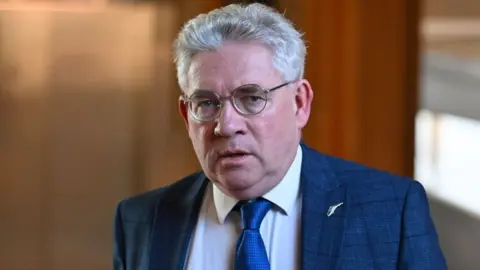
Finance committee convener Kenneth Gibson said the report was prompted by “great concern” over the rising costs and length of inquiries.
He told BBC Scotland News: “That denies people justice but it also impacts on other public services.”
The SNP MSP said that every area of the public sector – such as health, education and justice – had set budgets and were expected to deliver within a timescale, but that was not the case for public inquiries.
He added: “This is public money, this is money that’s not going into other public services if it’s going into inquiries and the cost of those has increased by £30m this year alone, so that’s something we really need to take cognisance of.”
A Scottish government spokesperson said: “Public inquiries play an important role in examining and learning from matters of public concern.
“They operate independently of government and are set up when no other avenue is deemed sufficient.
“In many cases, such as the Scottish Covid-19 Inquiry, they are set up with the support of, or in response to calls from, the Scottish Parliament.”
What is a public inquiry?
While set up and funded by the government to investigate matters of public concern, statutory public inquiries are independent.
They are expected to report their findings and make recommendations.
But they do not have the power to determine any criminal or civil liability, or award compensation.
Four public inquiries – examining the Covid crisis, hospital safety, child abuse and the death of Sheku Bayoh in police custody – are up and running in Scotland.
Another, into the murder of Emma Caldwell in 2005, began its work earlier this month.


